
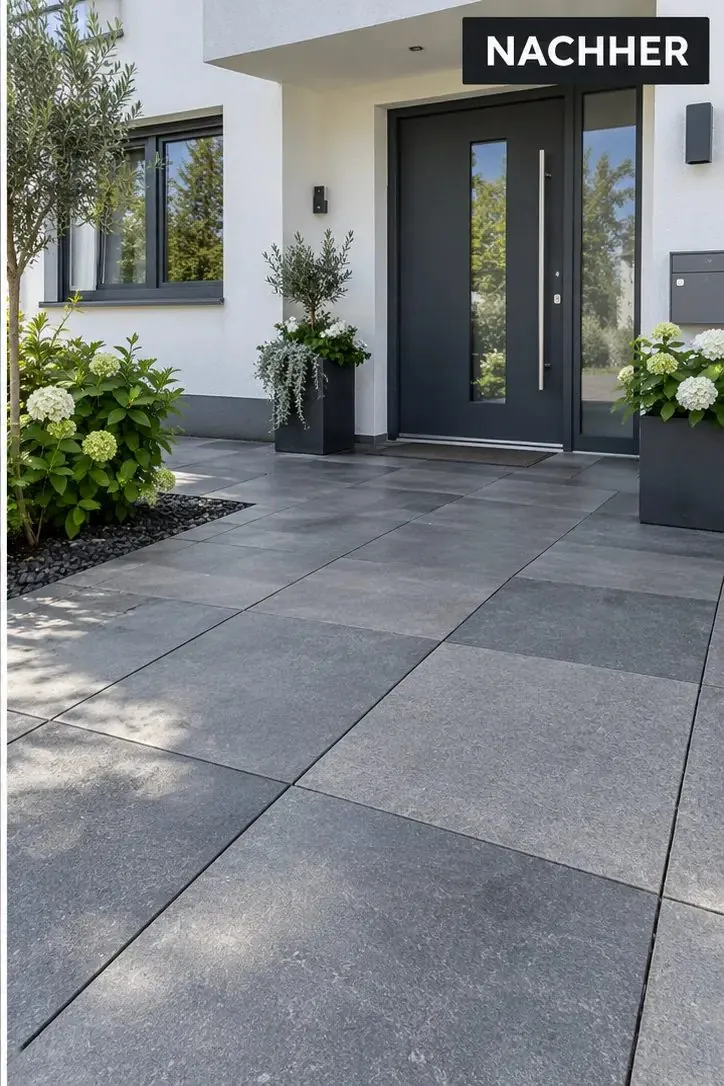
Professional paving & driveway cleaning in Dortmund & Ruhrgebiet — for clean, safe and well-kept outdoor surfaces
Paved surfaces face daily exposure to rain, frost, moss, algae, weeds and vehicle traffic. Professional cleaning removes contamination gently and largely restores the original appearance — for driveways, patios, courtyards, footpaths and garden paths.
- Free inspection and consultation
- Material-appropriate cleaning for different stone types
- Removal of moss, algae, weeds, oil and dirt
- Modern surface cleaners for even results
- Optional: re-jointing and impregnation
- Transparent guide prices — no hidden costs
The result speaks for itself
See for yourself what professional paving cleaning achieves — from green, slippery surfaces to a clean, well-kept area.
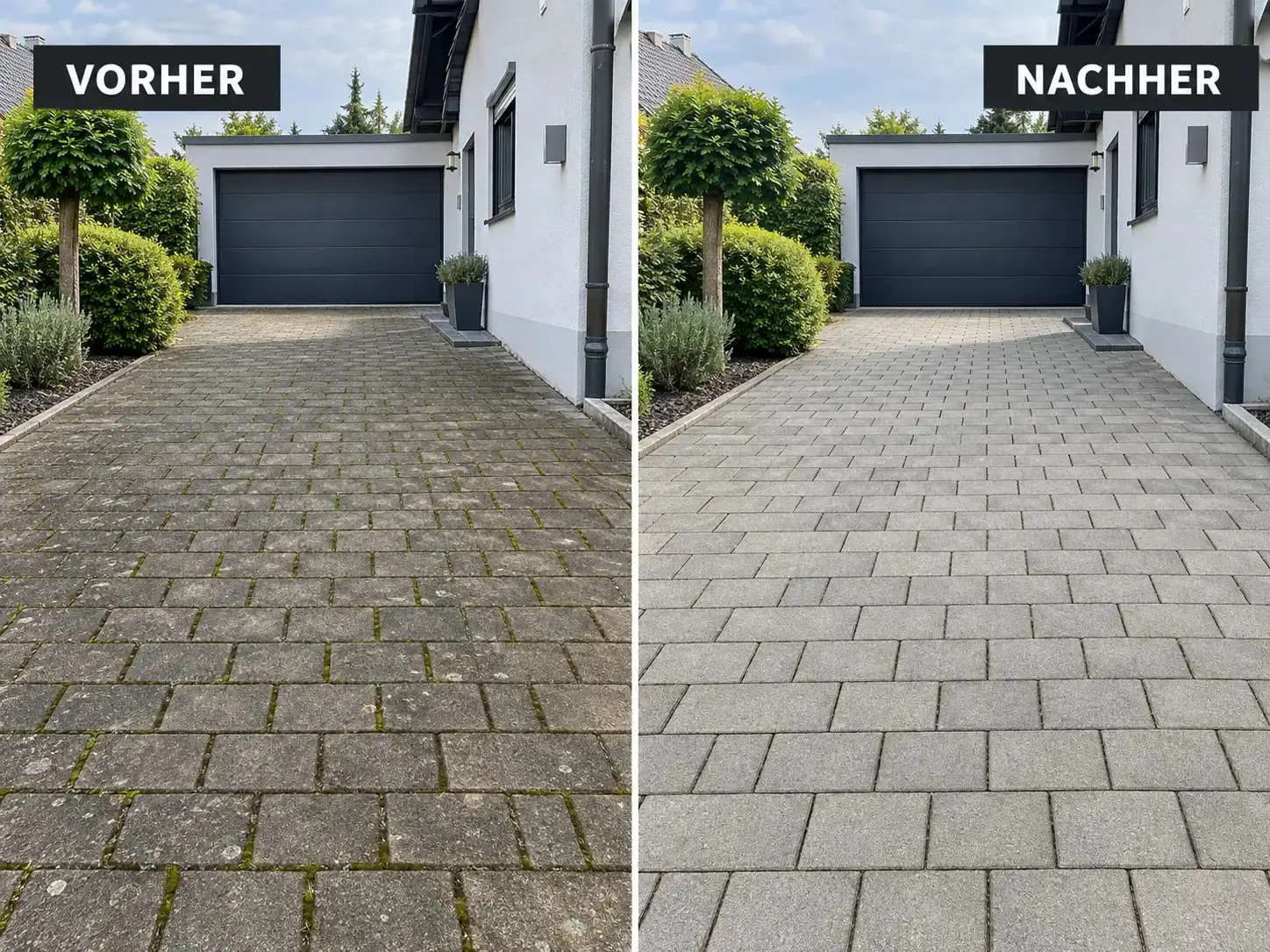
Illustrative example
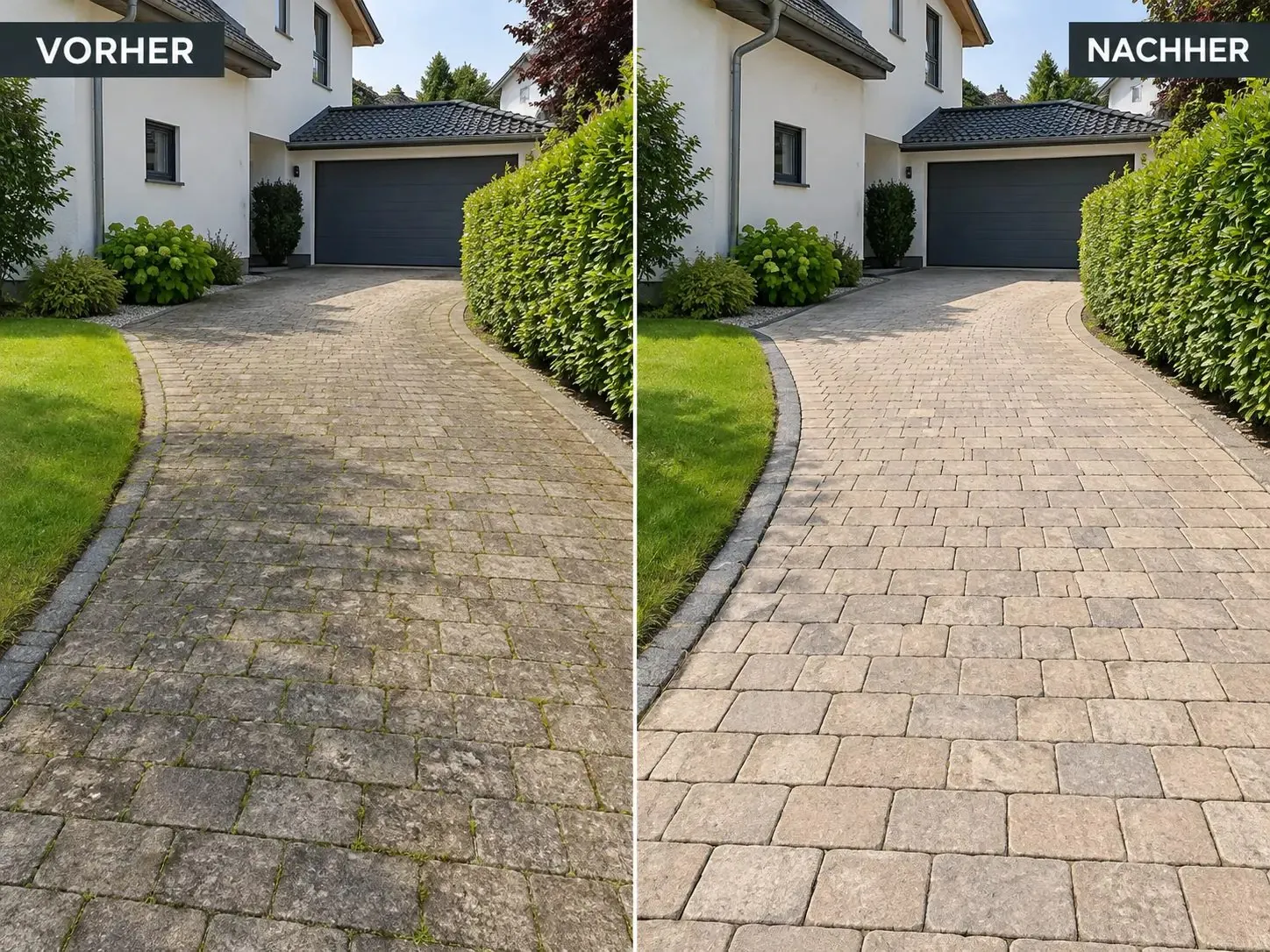
Illustrative example
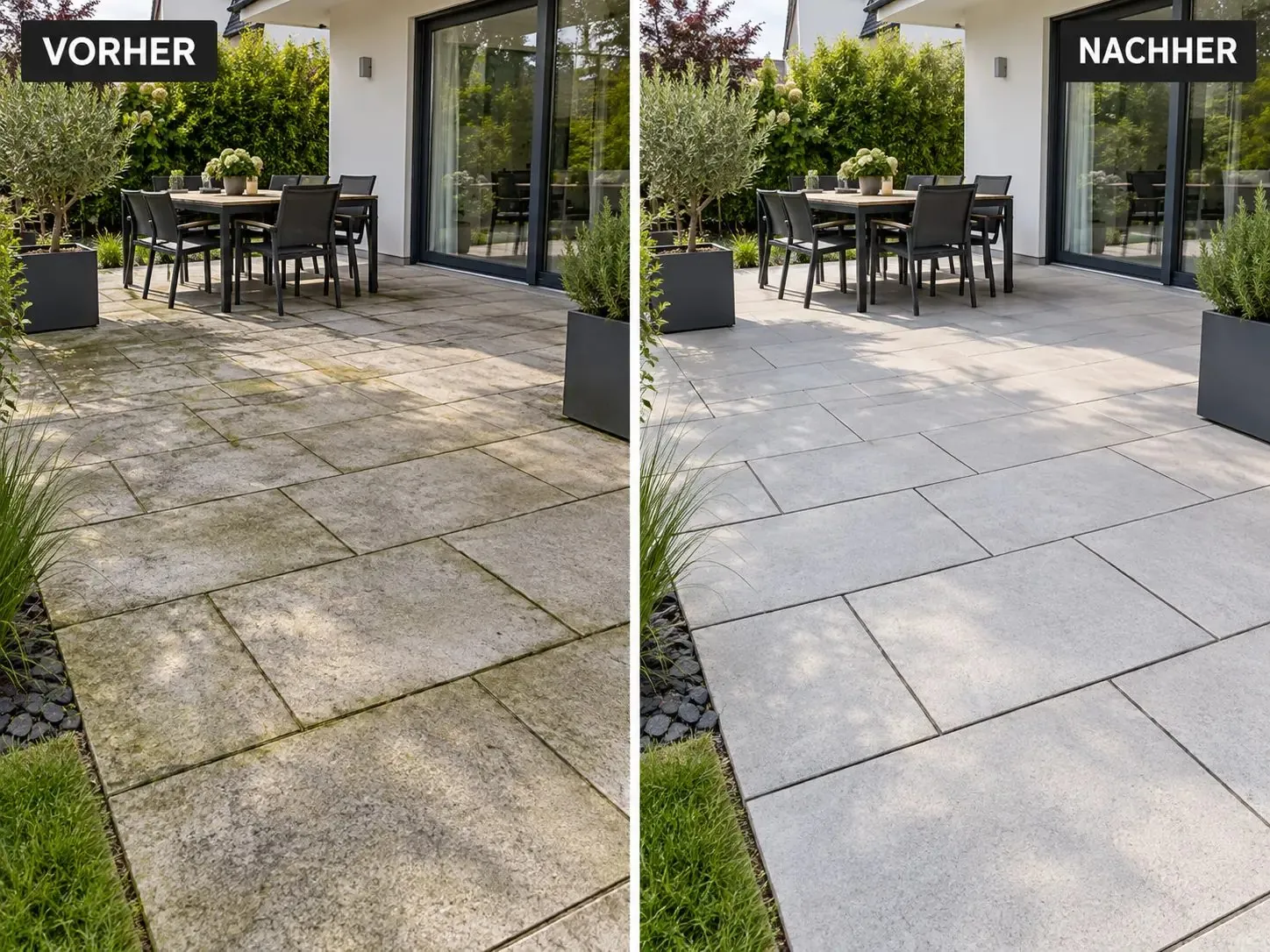
Illustrative example
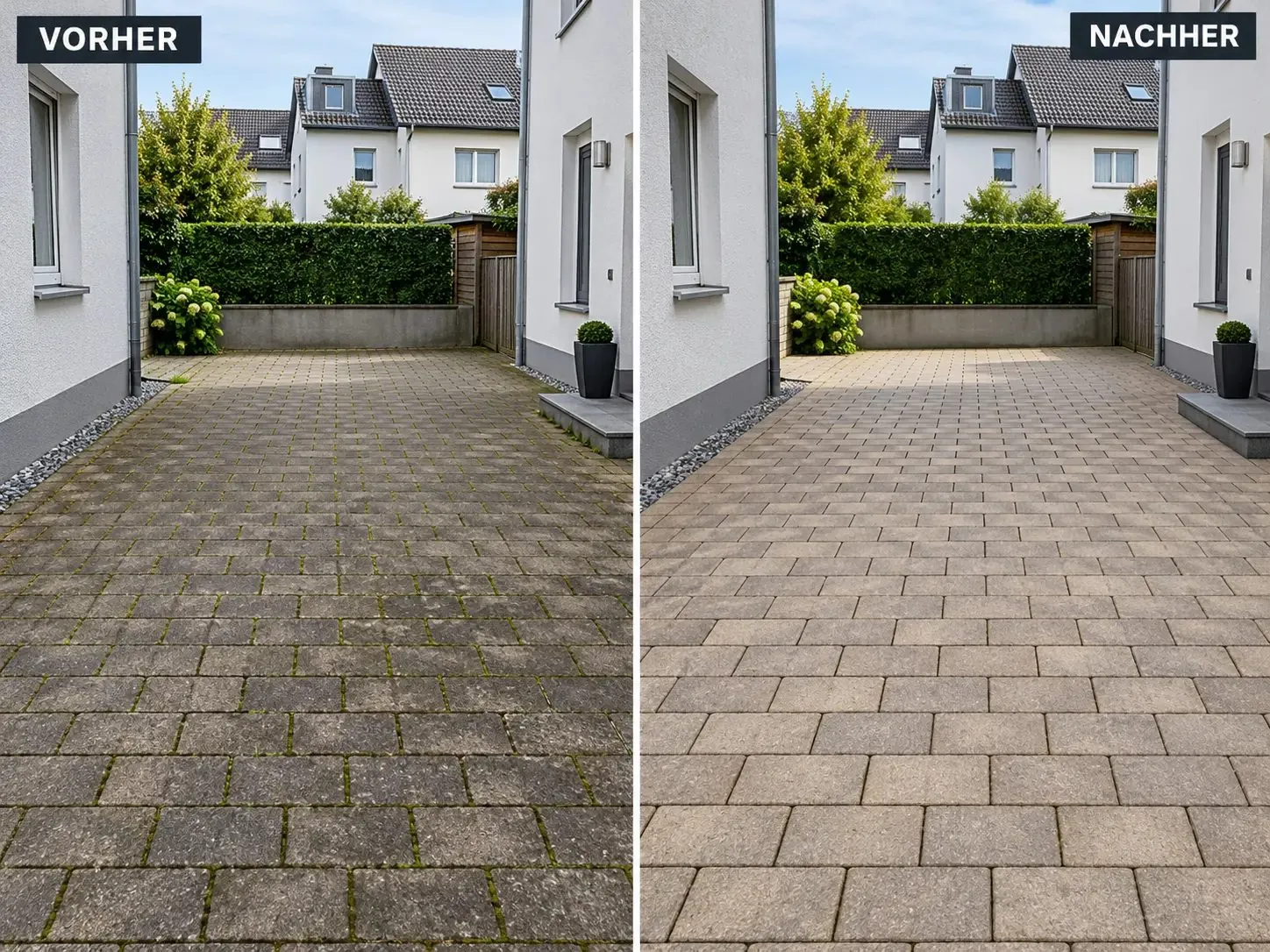
Illustrative example
Why does paving get dirty?
Paving stones are permanently exposed outdoors to a wide range of environmental influences. Over time, dirt, organic residue and moisture build up on the surface — creating ideal conditions for moss, algae and other micro-organisms.
- •Rain carries dirt
- •Moisture promotes moss & algae
- •Frost stresses joints
- •Leaves & needles
- •Resin & pollen
- •Bird droppings
- •Tyre residue
- •Oil traces
- •Brake dust
- •Fine dust & soot
- •Industrial particles
- •Construction site dust
- Slip risk
Moss and algae make paving very slippery when wet — slip accidents are a common consequence.
- Weeds in joints
Weeds can shift jointing material, root deeper and impair the long-term stability of the surface.
- Persistent moisture damage
Permanently damp areas promote biological growth and hinder natural drying.
- Appearance & value preservation
Dirty driveways and patios leave an unkempt impression — especially when selling or letting a property.
- A clean and well-kept appearance
- Removal of stubborn contamination
- Reduced slip risk
- Gentle cleaning tailored to stone type
- Preparation for optional impregnation or re-jointing
- Long-term value preservation of outdoor areas
Have your paved surfaces professionally assessed
Every surface is different. Material, age, level of contamination and surroundings determine which cleaning method makes sense. Free consultation — tailored quote.
Request your free paving assessment nowWhy the type of paving determines the right cleaning method
Not every paved surface can be cleaned the same way. Paving stones vary considerably in material, porosity, compressive strength and sensitivity to chemicals. That's why professional paving cleaning always starts with a material analysis.
Concrete paving (interlocking blocks)
The most common paving type in Germany
Properties & use
Robust, high load-bearing capacity, wide colour choice, economical. Used for driveways, parking spaces, footpaths, courtyards and patios.
Concrete is more porous than many natural stones — dirt particles can penetrate more easily.
Typical contamination
- •Algae & moss
- •Tyre residue & oil traces
- •Fine dust & soil
- •Leaves & organic residue
Recommended cleaning
- Surface cleaner
- Controlled water pressure
- Pre-treatment for oil or algae
- Optional impregnation
Caution: Excessive pressure can roughen surfaces, wash out pigments and increase future dirt adhesion.
Natural stone paving
High quality — but very material-dependent
Very hard, low water absorption, durable
Very resistant, typically: limescale, algae, moss
High water absorption, soft surface — especially sensitive!
Sensitive to acids — special care required!
Clinker brick paving
Fired at high temperatures — very dense, low water absorption, high colour stability.
- Surface cleaner
- Low pressure
- Special oil removers
Porcelain stoneware patios
Very low water absorption, high hardness, low maintenance. Often used for modern patio tiles.
- Gentle brushes
- Pure water possible
- Suitable porcelain stoneware cleaners
Exposed aggregate concrete & asphalt
Exposed aggregate concrete slabs (older patios) and adjacent asphalt areas — depending on weathering.
- Controlled pressure
- Surface cleaner
- Material-adapted methods
Paving joints — an often underestimated area
It's not just the stone itself that matters. The joints affect the stability, drainage and appearance of the entire surface.
- •Weeds & moss formation
- •Washed-out jointing sand
- •Organic deposits
If required, re-jointing after cleaning can be worthwhile. It improves:
- Stability of the whole surface
- Visual appearance
- Inhibits weed growth
- Supports drainage
What cleaning methods are available?
Not every type of contamination can be removed with the same technique. Professional paving cleaning pursues two goals: thoroughly cleaning the surface and permanently protecting the material.
Surface cleaner
Rotating nozzles in an enclosed housing distribute water pressure more evenly than an open lance. Significantly less spray, no streaking, better pressure control.
- Even cleaning results
- Minimal spray
- No streaking
- Efficient on large areas
- Material-friendly
Hot-water pressure cleaning
Warm or hot water improves cleaning effectiveness for certain types of contamination. Ideal for grease, oil, organic deposits and algae.
- •Often less use of chemicals
- •Better grease dissolution
- •Effective against organic contamination
Manual pre-cleaning
Before the main cleaning, leaves, twigs, loose soil, coarse moss and deposits are removed. This makes the actual cleaning more efficient and even.
- •Gentle removal of coarse contamination
- •No chemicals needed
- •Improves the main cleaning result
Specialist treatments
Mechanically, with controlled water pressure or — if needed — with suitable green-growth removers. Product choice always depends on material.
Special oil removers, hot-water cleaning or multi-stage methods. The earlier, the better — deeply penetrated stains may remain permanently.
Special rust removers depending on stone type. Caution with calcareous natural stone — some products are unsuitable.
Mechanical removal, joint cleaning and preparation for re-jointing. Prevents regrowth longer than simply cutting it back.
Aftercare & protection
Penetrates the stone — reduces water absorption, makes it harder for dirt to penetrate, and makes future cleaning easier. Leaves no visible layer.
Forms a protective layer on the surface. Enhances colour, easier-to-clean surface. Not suitable for all materials and uses.
Improves stability and appearance, inhibits weed growth and supports drainage. Worthwhile when jointing material is missing or damaged.
Our principle: We only ever use the pressure that's necessary for the given surface — never more. Material protection comes first.
Method comparison at a glance
| Method | Suitable for | Advantages | Notes |
|---|---|---|---|
| Surface cleaner | Concrete, clinker, robust paving | Even, minimal spray | Standard method |
| Hot water | Oil, grease, organic contamination | Higher cleaning effect | Material-dependent |
| High pressure (controlled) | Many robust surfaces | Effective | Adjust pressure carefully |
| Rotary nozzle | Heavily soiled robust surfaces | High performance | Not for sandstone/limestone |
| Manual cleaning | All materials | Gentle, complementary | Pre-cleaning |
| Impregnation | Many natural stone and concrete types | Eases future cleaning | Material-dependent |
| Sealing | Selected materials | Additional surface protection | Not always worthwhile |
How does professional paving cleaning work?
High-quality paving cleaning begins long before the pressure washer is switched on. Every surface is first analysed — then the suitable method is selected.
Inspection & analysis
Paving type, age, level of contamination, moss and algae growth, oil or rust stains, joint condition, drainage and adjacent areas are checked.
Preparing the surface
Removing furniture, loose debris, protecting sensitive plants and facades, securing the work area.
Pre-treatment
Stubborn contamination such as oil, grease, rust, algae, moss and lichen is specifically pre-treated — for better cleaning results.
Material-appropriate main cleaning
Surface cleaner, controlled water pressure, hot-water technology or special brushes — depending on surface, material and type of contamination.
Joint cleaning & inspection
Plant residue is removed, contamination cleared, joint condition checked. If needed: recommendation for re-jointing.
Final inspection
Even cleaning result, joint condition, drainage and any visible damage are finally checked.
Environmentally friendly working methods
As much cleaning power as needed — as little environmental impact as possible.
- Cleaning agents only used when the type of contamination requires them
- Many surfaces can be cleaned with water and mechanical action alone
- Water protection and the Water Resources Act (WHG) taken into account
- Local wastewater regulations complied with
- Guided by German Federal Environment Agency recommendations
Safety per BG BAU requirements
Professional paving cleaning also means working safely — with suitable equipment in line with German occupational safety regulations.
The right method makes all the difference
Professional equipment alone isn't enough. What matters is the right technique for the material — for optimal results without damage.
Request a free consultation nowIs professional paving cleaning worth it?
In many cases, yes — although the benefit depends on material, level of contamination and how the surface is used. Entrance areas and driveways in particular are often the first thing visitors or potential buyers see.
Visual upgrade
Moss and dark discolouration make high-quality paving look unkempt. After cleaning, texture and colour stand out much better.
Greater safety
Green growth is very slippery when wet. Regular cleaning significantly reduces this slip risk.
Less regrowth
Removing organic deposits reduces the conditions for new moss and algae growth.
Value preservation
Regular maintenance keeps paved surfaces in good condition — important for property value and first impressions.
Guide price from 199 €
All prices include 19% VAT and travel within 25 km of Dortmund. Beyond that: €0.95 per one-way km beyond 25 km.
Private customers: approximately 20% of labour costs are tax-deductible (§35a EStG).
Non-binding guide price. Binding fixed price after inspection or photo check.
Typical price guide
* Guide prices. Actual costs always depend on the property and services required. Transparent guide prices after a free inspection.
When does cleaning make sense?
Professional or DIY?
| Aspect | DIY cleaning | Specialist company |
|---|---|---|
| Material analysis | Not carried out | Always |
| Pressure & technique | Often incorrectly set | Optimally adjusted |
| Result | Often uneven | Even |
| Joints | Often washed out | Checked |
| Aftercare | Usually not | Advice & option |
| Time required | High | Efficient |
Common mistakes with DIY cleaning
Washes out joints, roughens surfaces and can permanently damage natural stone.
Not suitable for all materials, damages calcareous stone and may be legally problematic.
Not every surface tolerates chlorine. Environmental factors must also be considered.
Missing jointing sand promotes weed growth, impairs stability and encourages further washing-out.
Paving cleaning in Dortmund & Ruhrgebiet
We clean paved surfaces for private and commercial customers in Dortmund and throughout the Ruhr area and North Rhine-Westphalia — driveways, patios, courtyards, garden paths, commercial areas and car parks.
Why customers choose us
- Free on-site inspection — always no obligation
- Material analysis before every cleaning job
- Modern surface cleaners — no streaking
- Material-appropriate methods for all stone types
- Transparent guide prices with no hidden costs
- Optional: re-jointing & impregnation
- Environmentally conscious work in line with the WHG
- BG BAU occupational safety standards followed
- Regional service in Dortmund & Ruhrgebiet
Frequently asked questions about paving & driveway cleaning
Answers to the most important questions — from costs and methods to impregnation and re-jointing.
Everything from one provider
Many customers combine paving cleaning with other exterior cleaning services — this saves time and travel costs.
Your outdoor surfaces deserve professional care
A clean driveway, patio or well-kept courtyard not only improves the first impression of your property but also contributes to safety and value preservation. We clean gently, thoroughly, and with a method tailored to your surface.
- Free on-site inspection
- Material-appropriate cleaning — no blanket high pressure
- Optional: re-jointing & impregnation
- Service area: Dortmund & the Ruhr area
How clean can your driveway get again?
Have the condition checked beforehand — by photo or with a free on-site test service.